Measuring Biogenic Carbon Content of Fuels through ASTM D6866
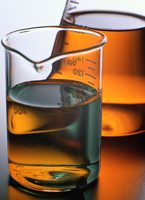 ASTM D6866 is the standard test method developed by ASTM International (formerly the American Society for Testing and Materials) to determine the biobased carbon/biogenic carbon content of solid, liquid, and gaseous samples using radiocarbon analysis. Because it can be used to analyze any type of sample, it is recognized to be a very good analytical method for different types of biofuels.
ASTM D6866 was first released in 2004. Several versions have been published since then – ASTM D6866-04, ASTM D6866-04a, ASTM D6866-05, ASTM D6866-06, ASTM D6866-06a, ASTM D6866-08, ASTM D6866-10, ASTM D6866-11, ASTM D6866-12, ASTM D6866-16, ASTM D6866-18, ASTM D6866-20, ASTM D6866-21 and ASTM D6866-22. ASTM D6866-24 is the current active version of the standard as of February 2024.
The radiocarbon dating method may have started as a tool in archaeology and other fossil studies, but it has now found other applications, notably the quantification of the biogenic fractions in biobased materials.
To illustrate how ASTM D6866 is applied for biofuel testing, let us use bio-diesel as an example (explanation below).
ASTM D6866 Results and Interpretation
The application of ASTM D6866 to derive the bio-diesel content in a mixture is built on the same concepts as radiocarbon dating but without using age equations. It is done by deriving a ratio of the amount of radiocarbon (carbon 14) in an unknown sample to that of a modern reference standard. The ratio is reported as a percentage with the units “pMC” (percent modern carbon). If the material being analyzed is a mixture of present-day radiocarbon and fossil carbon (which contains no radiocarbon), then the pMC value obtained correlates directly to the amount of bio-diesel present in the sample.
Combining fossil carbon with present-day carbon into a material will result in a dilution of the present-day pMC content. As the present-day bio-diesel materials have a known pMC value (99.7 in 2024) and 0 pMC represents petroleum derivatives, the measured pMC value for that material will reflect the proportions of the two component types. A material derived 100% from present-day soybeans would give a radiocarbon signature near 99.7 pMC in 2024. If that material was diluted with 50% petroleum derivatives, it would give a radiocarbon signature near 50 pMC.
The ASTM D6866 results involve materials provided without any source information. This situation is highly probable in a real-life situation. The Mean Value quoted in this report encompasses an absolute range of 6% (plus and minus 3% on either side of the Mean Bio-diesel Result) to account for variations in end-component radiocarbon signatures (a conservative approximation). It is presumed that all materials are present-day or fossil in origin, and that the desired result is the amount of bio-diesel component “present” in the material and NOT the amount of bio-diesel material “used” in the manufacturing process. One can interpret the reported percentages as maximum values (the most conservative interpretation).
Radiocarbon Dating
Radiocarbon dating, first developed in 1947, depends on the continuous production of a radioactive isotope—carbon 14 or radiocarbon—by cosmic rays in the upper atmosphere. The isotope combines with oxygen to form carbon dioxide, which filters down to the biosphere and is taken up by plants, which are subsequently eaten by animals.
The carbon 14 is continuously lost by radioactive decay, but this is balanced by the continuous production by cosmic rays. All living beings, plant and animal, will have the same concentration of carbon 14. However, when the plants or animals die, their carbon 14 is no longer replaced from the atmosphere. The content of this isotope in the dead remains or fossils gradually decreases up to the point where there is essentially none left, taking approximately fifty thousand years.
Radiocarbon dating procedures accurately measure the carbon 14 content in various materials, and from carbon dating results one can calculate when the plant or animal died. The dating system is an indispensable tool for archaeology, geology, and other earth sciences.
Radiocarbon dating is a branch of nuclear chemistry and physics. Since the amount of carbon 14 is very small, the most sensitive techniques for its measurements are required. Two procedures are currently used, radiometric dating and accelerator mass spectrometry.
Radiometric vs. AMS Dating
Radiometric dating measures the radiation produced from the disintegration of carbon 14 while accelerator mass spectrometry directly measures the concentration of carbon 14 in a sample. There is extensive instrumentation involved in both techniques as well as complicated chemistry in the preparation of samples before measurement.
For both radiometric and accelerator mass spectrometry techniques, pretreatments of the samples are important. The procedures for these techniques vary widely, depending on the type of material being measured. The steps involve various physical and chemical operations to eliminate extraneous materials. The pretreatment steps for the two techniques are different, but both involve high-vacuum operations.
For radiometric measurement, the samples are combusted in a specialized vacuum system to produce carbon dioxide. This is then combined with molten lithium to produce lithium carbide. After cooling, the lithium carbide is reacted with water to produce acetylene. This gas is purified and finally converted to benzene using a silica-alumina catalyst. All of these procedures are carried out in glass vacuum systems. The benzene, which is 92% carbon, is mixed with scintillator chemicals and placed in a liquid scintillation counter for radiation detection. On average, the sample will remain in a counter for two days to accumulate enough counts to give reasonable statistics. Both contemporary standards and background materials are also subsequently measured in the same counters.
Samples for accelerator mass spectrometry are combusted to carbon dioxide, which is then purified. The carbon dioxide is reacted with hydrogen to form graphite in a specialized glass vacuum line. The graphite, which is 100% carbon, is placed into aluminum target holders and placed in the particle accelerator for measurement. The analysis takes about thirty minutes. As with the radiometric technique, modern and background samples are subsequently measured in the same way.
In addition, all samples are analyzed for the stable isotope, carbon 13. This is essential for adjustment of the measured carbon 14 values. Carbon 13 measurement is an integral part of radiocarbon dating although it is not suitable for precisely determining renewable vs. fossil contents in mixtures.
Page last updated: July 2024